
Mechanical & Development Engineer, CFD & Simulation
I build validated simulation models and turn them into practical design decisions. Based in East Jutland, Denmark.
About
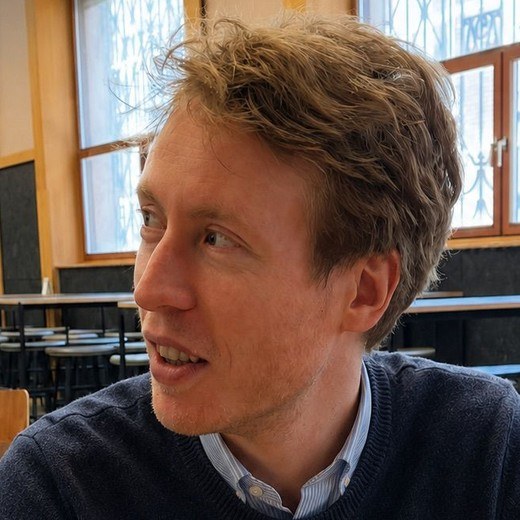
I’m a mechanical engineer specialising in CFD and simulation-driven design. What I care about most is the point where analysis meets a real product: building a model, validating it against physical reality, and turning the results into decisions someone can actually build on.
My bachelor thesis, carried out with VELUX, combined CFD in OpenFOAM with a physical validation experiment and was graded at the highest level. I work primarily in OpenFOAM and SolidWorks, and I care about validation and quantifying uncertainty, not just producing a result.
I also bring an earlier background in business, innovation, and consulting, which shapes how I connect technical work to product value and how I communicate it across a team. I’m currently looking for mechanical, development, or CFD engineering roles where analysis drives real design.
CFD & simulation
Thesis
Aerodynamic Optimisation of a Skylight Upstand
Bachelor thesis · in collaboration with VELUX · graded at the highest level
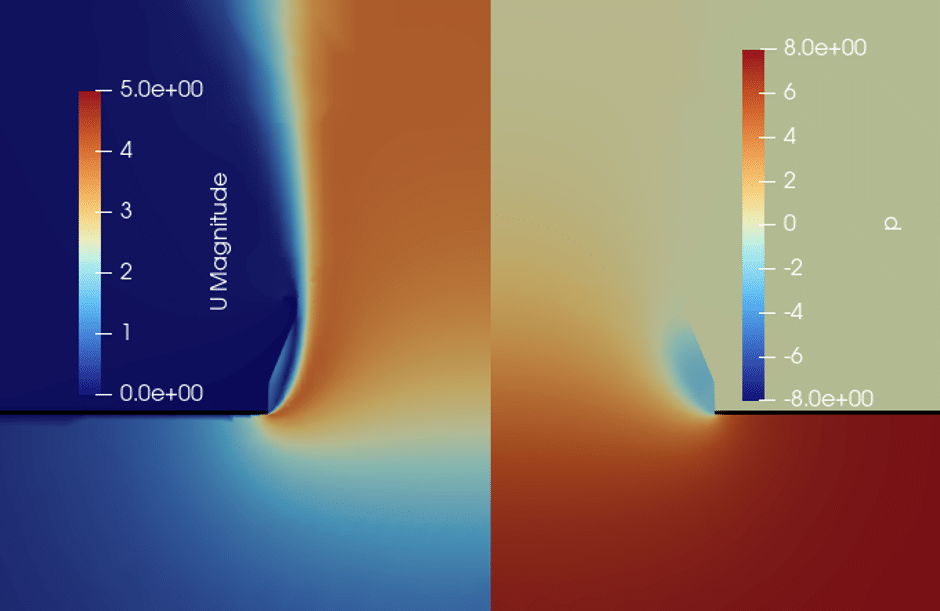
This project set out to answer a practical engineering question using simulation: how does geometry affect the aerodynamic performance of a building ventilation component, and can a CFD model predict that reliably enough to guide design decisions?
I built a steady-state RANS model in OpenFOAM (k-omega SST), cross-checked it against SolidWorks Flow Simulation, and, the part I’m proudest of, designed and ran a physical experiment to validate it: a proxy setup using water to recreate the conditions of the real-world test in a controlled, measurable way. Comparing physical results against the simulation is what turned the model from a plausible output into something I could actually stand behind.
Alongside the core results I quantified uncertainty across mesh, domain, and measurement. The study reliably identified the best-performing geometry and, just as importantly, established how far the simulation could be trusted.
Tools
OpenFOAM · k-omega SST · SolidWorks Flow Simulation · ParaView
Exploring CFD across the solver landscape
Self-directed project
Beyond my thesis, I’ve deliberately worked outside my comfort zone in CFD, teaching myself to set up and run simulations across most of OpenFOAM’s major solver families. The goal was range: to be someone who can pick up an unfamiliar class of flow problem and get a credible simulation working, not only the type I already knew. Most cases began from reference setups and were then adapted to my own geometries, which is where the real learning happened: diagnosing instabilities, getting radiation and turbulence models behaving in 3D, and reasoning about what the results actually meant.
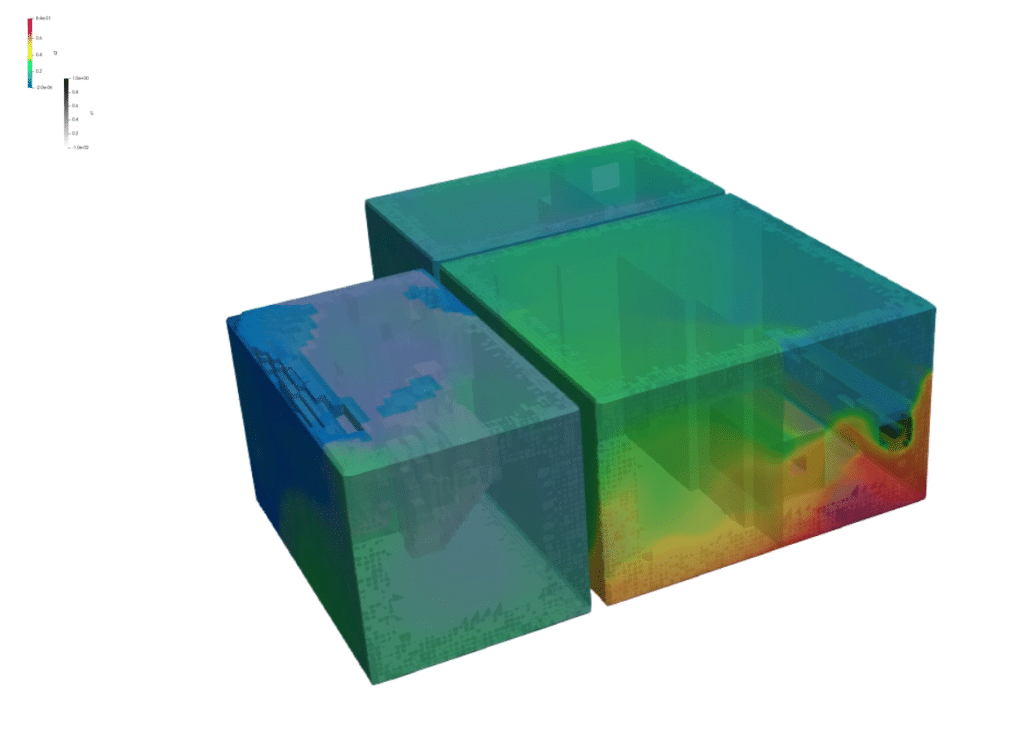
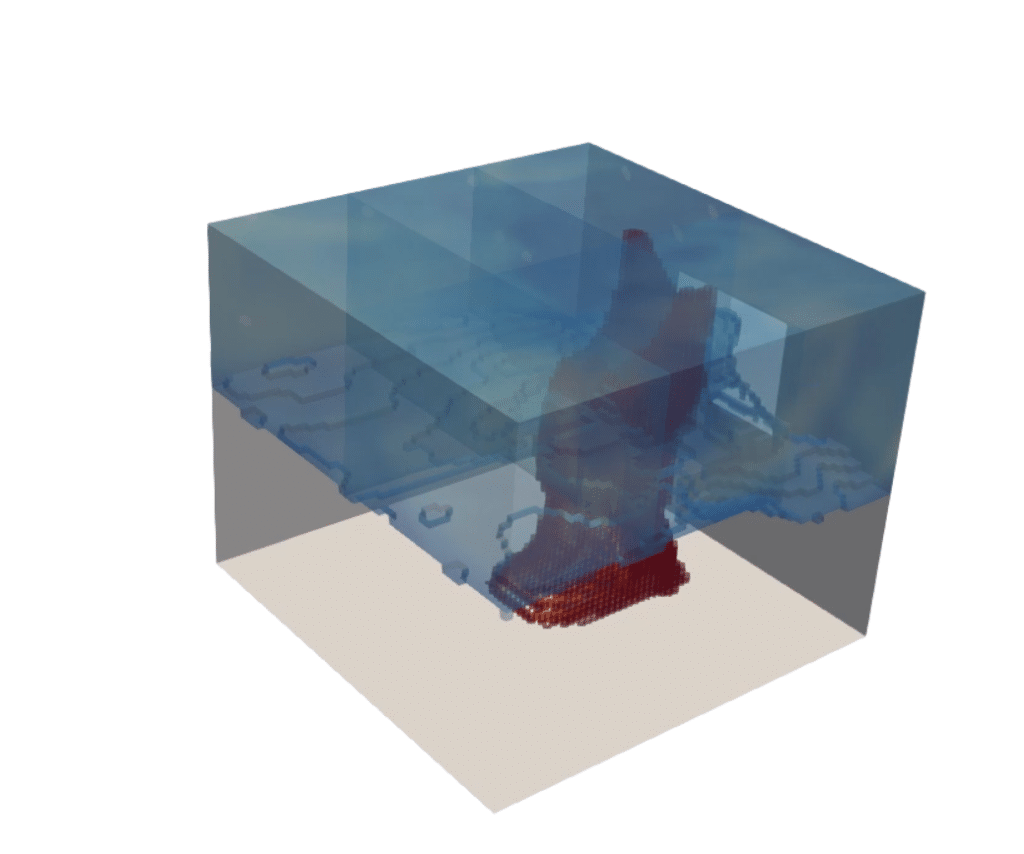
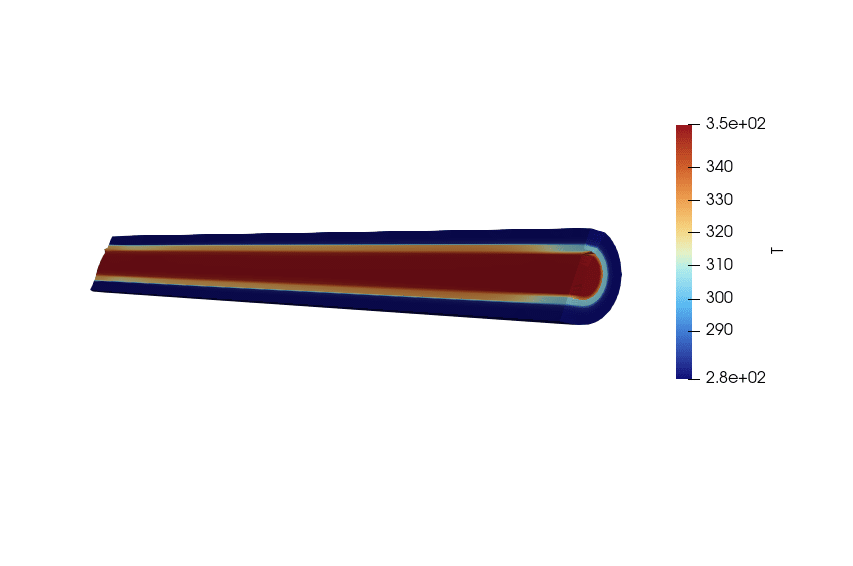
The work spanned conjugate heat transfer, combustion, compressible flow with shocks, and fire and smoke dynamics, building up to my own ventilation-opening geometry acting as a buoyancy-driven smoke exhaust. That last case connects back to the thesis: the same opening studied under forced flow, now under fire-driven buoyancy.
Tools
Conjugate heat transfer · Combustion · Compressible / shock · Fire & smoke · Multiphase (VOF) · Free-surface · Vortex shedding · Rotating machinery
HARDWARE & DESIGN
Solar still for maritime use
Study project · design, build, and experimental testing
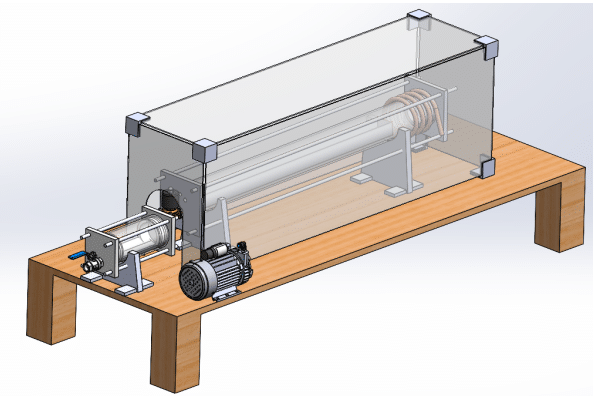
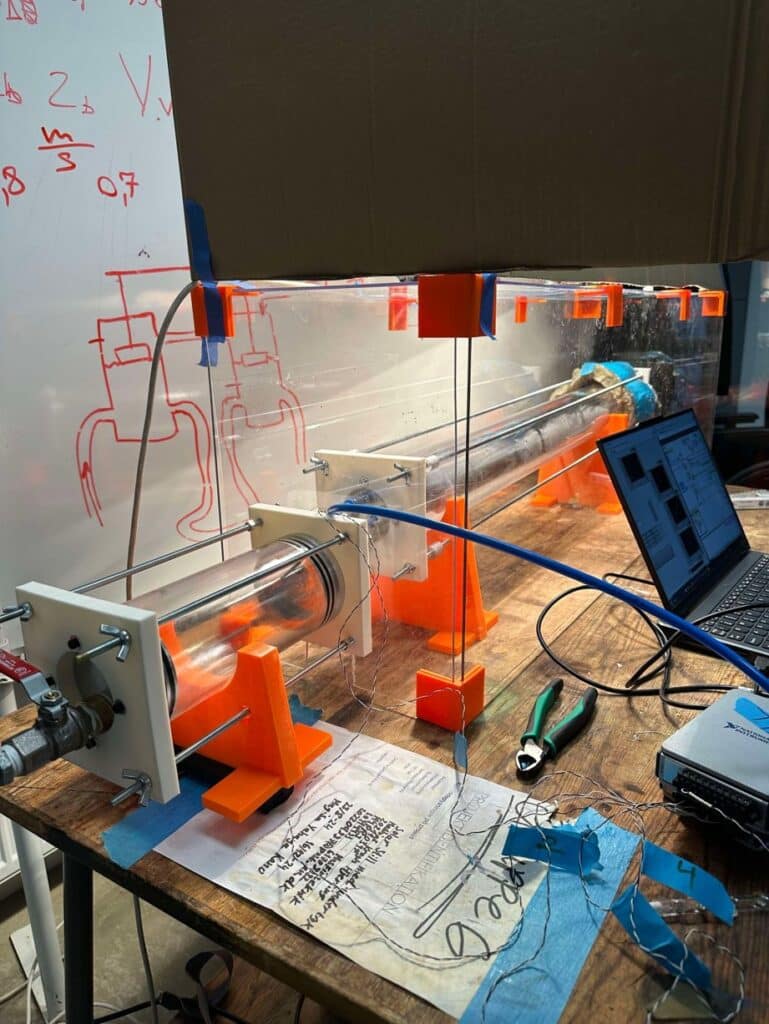
A solar-powered desalination still designed for use on boats, turning seawater into fresh water using only solar energy. I designed the system in SolidWorks and then built a physical test rig to see whether it actually performed, instrumenting it and logging the data through LabVIEW. As with my thesis, the point was to close the loop between a design and real measured behaviour rather than stopping at the model.
High-performance braking system redesign
Study project · mechanical design
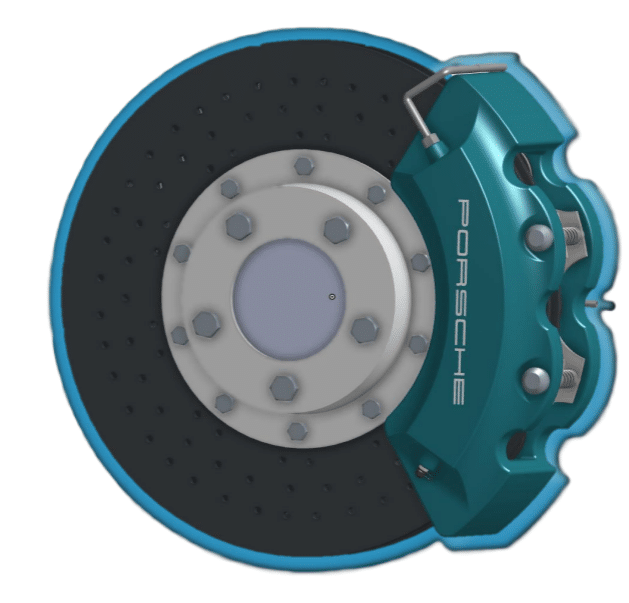
A redesign of a braking system to meet the demanding requirements of a high-performance sports car, focused on the disc and caliper. The project worked from the real-world demands on the system, heat, repeated hard braking, and packaging, through to a full CAD design.
Plastics: part, tool, and moulding process
Coursework project
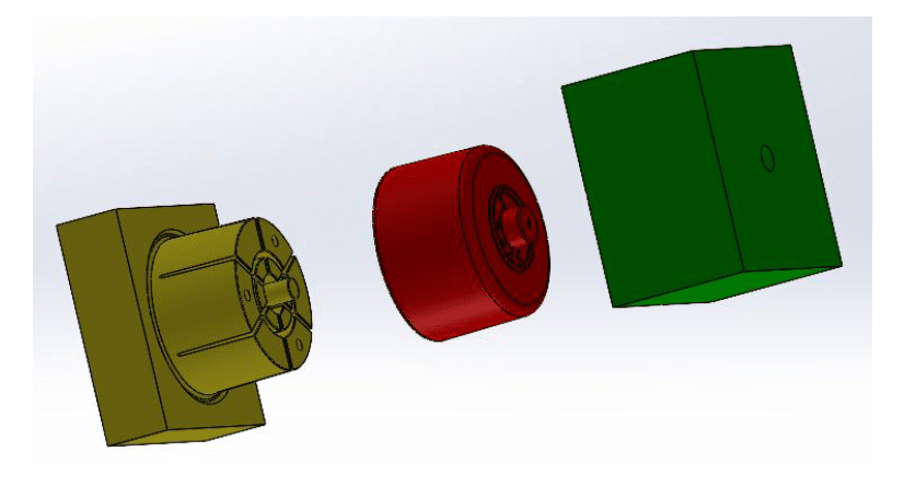
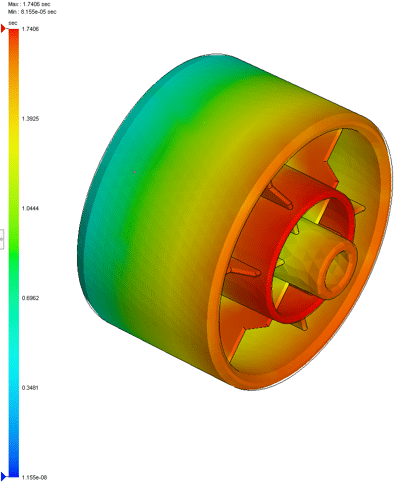
Designed an injection-moulded component together with the tool to produce it, then simulated the moulding process itself to check how the part would fill. I also characterised the polymers hands-on using melt flow index, DSC, and TGA, and prototyped the part in plastic. It runs the full arc from material properties, through part and tool design, to a manufacturable component.
Data-matching tool (Python) & 3D printing
Personal projects
A two-stage data-matching tool in Python that ingests text from multiple sources, cleans and enriches it, and scores each item for relevance using a keyword pass and an LLM judgement stage. Alongside it, regular 3D printing keeps me close to the practical side of design: tolerances, materials, and the gap between a model on screen and a part in your hand.
SKILLS & TOOLS
Simulation & CFD: OpenFOAM · k-omega SST · SolidWorks Flow Simulation · ParaView · Mesh generation · Model validation · Uncertainty quantification
Design & analysis: SolidWorks · FEA / FEM · Design optimisation · Plastics / injection moulding · Cost-out
Thermal & fluid: Thermodynamics · Fluid mechanics · Refrigeration & climate tech
Programming & data: MATLAB · LabVIEW · Python · Mathcad · MySQL
Background
- Engineering Intern, Design Optimisation — VELUX — 2025
- BEng Mechanical Engineering — Aarhus University, Diplomingeniør, Maskinteknik — 2023-2026
- Freelance Business Consultant — Self-employed — 2014-2023
- MSc Economics & Business Administration — Aarhus University, Risk Management, Marketing & Innovation — 2012-2014
- BSc International Management — Aarhus University & Glasgow Caledonian University — 2008-2011
Contact
Let’s talk.
I’m open to mechanical, development, and CFD engineering roles in Denmark.
Mathias Erikstrup · Auning, Denmark · +45 51 36 14 10 · materikstrup@gmail.com